
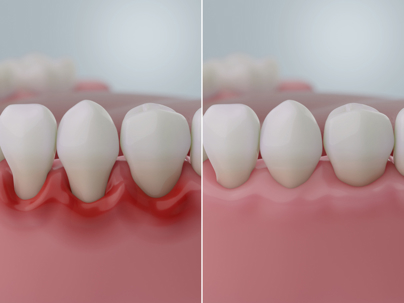
Most people understand that diabetes affects blood sugar, circulation, and healing. What is less commonly known is that gum disease is one of the conditions most directly tied to diabetes, and the relationship runs in both directions. Diabetes increases your risk of developing gum disease, and untreated gum disease can make blood sugar harder to control. For patients managing diabetes, the health of their gums is not a separate concern. It is part of the same picture.
At ProHEALTH Dental, our intake process includes a review of your health history, medications, and conditions like diabetes before your first appointment. That context shapes how we approach your care from the start.
How Diabetes Affects Your Gums
Diabetes affects the body's ability to fight infection and heal tissue. Those two factors directly impact the gums. Patients with diabetes experience elevated glucose levels in saliva, which feeds the bacteria responsible for plaque buildup. They also have a reduced immune response, making it harder to fend off the bacterial infections that cause gum disease to develop and progress.
The result is that people with diabetes are significantly more likely to develop periodontal disease than those without it. They are also more likely to experience it at a faster rate and a greater severity. Gum recession, bone loss around the teeth, and persistent inflammation are all more common in patients with uncontrolled or poorly managed blood sugar.
This does not mean gum disease is inevitable for every diabetic patient. It means regular periodontal monitoring is not optional. It is a necessary part of managing the condition.
How Gum Disease Affects Blood Sugar Control
This is the part of the relationship that surprises most patients. Gum disease does not just respond to diabetes. It actively worsens it.
Periodontal disease causes chronic inflammation in the gum tissue. That inflammation releases cytokines, proteins that interfere with how the body processes insulin. The result is increased insulin resistance, which makes blood sugar harder to regulate even in patients who are otherwise managing their diabetes carefully through diet, exercise, and medication.
Research has consistently shown that treating gum disease in diabetic patients leads to measurable improvements in A1c levels, the marker used to track long-term blood sugar control. In other words, periodontal treatment is not just protecting your gums. It is supporting your diabetes management.
The two-way connection is clinically established: diabetes raises the risk of gum disease, and gum disease undermines blood sugar control. Addressing one without monitoring the other leaves the loop incomplete.
Warning Signs Diabetic Patients Should Watch For
Because diabetes can mask pain and slow the visible signs of tissue damage, some patients do not realize gum disease has progressed until it is in a more advanced stage. Warning signs worth bringing to your dental provider include:
- Gums that bleed during brushing or flossing
- Persistent bad breath that does not resolve with brushing
- Gums that appear red, swollen, or puffy
- Teeth that feel loose or have shifted position
- Gum recession or teeth that look longer than they used to
- Slow healing after a dental procedure
If you have been diagnosed with diabetes and have not had a periodontal evaluation recently, that is the place to start.
What Diabetic Patients Should Know About Their Dental Care
Managing oral health with diabetes requires more than twice-yearly cleanings. Most patients with a history of gum disease or uncontrolled blood sugar benefit from more frequent periodontal maintenance visits, typically every three to four months rather than every six.
Your dental team also needs a current picture of your medications and overall health management. Certain diabetes medications affect saliva production, which changes the oral environment. Blood sugar levels at the time of a procedure affect healing. Sharing this information at intake is not a formality. It is what allows your provider to deliver care that accounts for your full clinical picture.
At ProHEALTH Dental, health history including diabetes and current medications is part of our intake process at every location. If your situation changes between visits, letting our team know at the start of your appointment keeps your care accurate and up to date.
Periodontal Care at ProHEALTH Dental
ProHEALTH Dental has periodontal specialists available at multiple locations across Long Island and Queens, making it possible for diabetic patients to access the level of monitoring and treatment their gum health requires within a practice that already knows their history.
Periodontal services available include scaling and root planing, osseous surgery, gum recession treatment, bone and tissue grafting, and structured periodontal maintenance programs. For patients whose cases require it, our periodontal team coordinates with other specialists in the practice directly.
Periodontal services available include scaling and root planing, osseous surgery, gum recession treatment, bone and tissue grafting, and structured periodontal maintenance programs. For patients whose cases require it, our periodontal team coordinates with other specialists in the practice directly.
Periodontal care is available at our Astoria, Lake Success, Howard Beach, Long Island City, and Huntington locations.
If you have diabetes and have not had a periodontal evaluation recently, now is a good time to schedule one. Contact your nearest ProHEALTH Dental location to book an appointment. Our team will review your health history and build a care plan that accounts for where you are.