
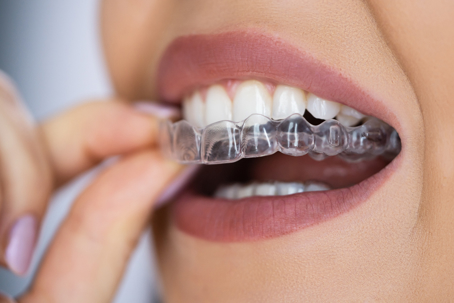
If you spent your teenage years without braces and have been quietly thinking about your teeth ever since, you are not alone. A large and growing number of adults are starting clear aligner treatment in their 30s, 40s, 50s, and beyond. The idea that orthodontic treatment is only for teenagers is one of the most common misconceptions in dentistry, and it keeps a lot of people from asking a question that has a straightforward answer.
There is no upper age limit for clear aligner treatment. What matters is not how old you are but whether your teeth, gums, and supporting bone are healthy enough to support tooth movement. For most adults, the answer is yes.
Why Adults Are Choosing Clear Aligners Now
Adult orthodontic treatment has increased significantly over the past decade. According to the American Association of Orthodontists, roughly one in four orthodontic patients in the United States is an adult. The reasons vary.
Some patients had braces as teenagers but experienced shifting after stopping retainer use. Others never had orthodontic treatment at all and have simply reached a point where they want to address something that has bothered them for years. And for many, the availability of clear aligners changed the calculation entirely. Wearing metal brackets and wires as an adult feels like a significant barrier. A nearly invisible, removable tray does not.
Clear aligners fit adult life in a way that traditional braces often do not. They come out for meals and brushing. Most people you interact with will never know you are in treatment. And the appointments tend to be less frequent than with braces, which matters when you are managing a full schedule.
What Makes an Adult a Good Candidate?
Age is not the determining factor. Gum and bone health is. Teeth move in response to gentle, consistent pressure applied by aligner trays. That process works the same way at 45 as it does at 17, provided the structures supporting your teeth are in good condition.
Adults who are strong candidates for clear aligners typically have:
- Healthy gums with no active gum disease
- Sufficient bone density supporting the teeth
- Mild to moderate crowding, spacing, or bite concerns
- Good oral hygiene habits
- No significant restorative issues that would need to be addressed first
If you have a history of gum disease, that does not automatically disqualify you. It does mean the gum disease needs to be treated and stabilized before aligner treatment begins. At ProHEALTH Dental, patients have access to periodontal specialists at multiple locations, which means gum health concerns can be evaluated and addressed within the same practice before treatment starts. You are not starting over with a new provider.
What Might Complicate Treatment?
Clear aligners are effective for a wide range of alignment issues, but they are not the right solution for every case. Some situations are better addressed with traditional braces or a combination of orthodontic and restorative treatment.
Factors that may complicate or limit clear aligner candidacy include:
Significant bone loss: Advanced bone loss from untreated periodontal disease can limit how much tooth movement is safely achievable.
Severe bite issues: Complex bite problems, including significant overbite, underbite, or crossbite, may require a different orthodontic approach or a combination of treatments.
Missing teeth or major restorative work: Existing crowns, bridges, or implants in key positions can affect aligner movement and sequencing. These cases require careful planning but are often still treatable.
A consultation is the only way to know for certain. Your provider will evaluate your bite, gum health, and bone structure and tell you directly whether clear aligners are appropriate and what your options are if they are not.
What Does Treatment Look Like for Adults?
The process is the same regardless of age. It starts with a consultation and a digital scan of your teeth. No physical impressions are required. The scan is used to map out your treatment plan and show you a projection of your results before your first tray is made.
You receive a series of custom-fitted aligner trays. Each set is worn for approximately one to two weeks and gradually shifts your teeth into alignment. Check-in appointments are typically scheduled every six to eight weeks, keeping office time minimal.
Treatment length varies depending on the complexity of your case. Minor alignment issues can be corrected in as few as six months. More involved cases may take twelve to eighteen months. Your provider will give you a realistic timeline at your consultation.Once treatment is complete, a retainer keeps your results in place. Wearing it consistently is what prevents the shifting that causes many adults to seek treatment in the first place.
ClearCorrect and Invisalign at ProHEALTH Dental
ProHEALTH Dental offers clear aligner treatment across our network, with system availability varying by location.
ClearCorrect is available at all ProHEALTH Dental locations. Invisalign is available at Howard Beach, Huntington, Mount Kisco, Hoboken, and White Plains.
Both systems use custom-fabricated clear trays to move teeth gradually and comfortably. Both are removable, discreet, and clinically effective. At ProHEALTH Dental, our provider will recommend the system that best fits your case and goals.
For adult patients with gum health concerns, our multi-specialty model means you can address periodontal health and begin aligner treatment within the same practice, with providers who communicate directly with each other throughout your care.
The Real Answer to the Question
If you are healthy enough to be in the dentist's chair, you are likely healthy enough for clear aligners. Adults in their 50s, 60s, and beyond complete aligner treatment every day. What changes with age is not whether treatment is possible but how important it becomes to ensure the supporting structures are in good shape before starting.
The question is not whether you are too old. The question is whether now is the right time to find out.
Contact the office nearest you to schedule your evaluation and get a clear picture of your options.
FAQ
Can adults get clear aligners at any age?
There is no age cutoff for clear aligner treatment. Adults in their 50s, 60s, and older complete aligner treatment successfully when their gum and bone health is in good condition. Age alone is not a disqualifying factor.
How is clear aligner treatment different for adults than for teens?
The mechanics are the same. The main clinical difference is that adult bone is fully developed and denser than adolescent bone, which can mean tooth movement is slightly more gradual. Treatment timelines for adults are comparable to teens and in some cases shorter, depending on the complexity of the case.
Do I need healthy gums to start treatment?
Yes. Active gum disease needs to be treated and stabilized before clear aligner treatment begins. Once gum health is established, aligner treatment can proceed normally. At ProHEALTH Dental, patients have access to periodontal specialists at multiple locations, so this evaluation and any necessary treatment can happen within the same practice.
What if I had braces as a teenager and my teeth have shifted?
Shifting after orthodontic treatment is one of the most common reasons adults seek clear aligners. It typically happens when retainer use was inconsistent after braces. Clear aligners can address this shifting effectively, and in many cases, re-treatment for shifted teeth is faster than the original treatment.
How much do clear aligners cost for adults?
Treatment cost varies depending on the complexity of the case and the aligner system used. Most clear aligner treatments range from $3,000 to $7,000. Dental insurance may cover a portion of the cost if your plan includes orthodontic benefits. ProHEALTH Dental frequently runs promotional pricing, financing options, and payment plans. Ask about current promotions when you schedule your consultation.
How long does treatment take?
Treatment length depends on how much movement is needed. Minor alignment issues can be corrected in as few as six months. More involved cases typically take twelve to eighteen months. Your provider will give you a specific timeline estimate at your consultation.
Will I need a retainer after treatment?
Yes. A retainer is required after any orthodontic treatment to maintain your results. Consistent retainer wear is what prevents your teeth from shifting back over time.