
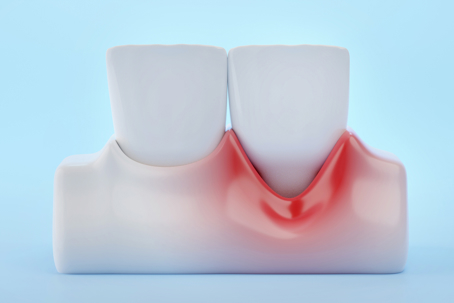
If you've noticed your teeth looking longer than they used to, or if your gums seem to have pulled back from the base of your teeth, you may be dealing with gum recession. It's a condition many patients first discover during a dental cleaning, when a hygienist points out early-stage changes that weren't obvious before. And while the visual difference can be easy to dismiss, gum recession is often a signal of a deeper issue that, left untreated, affects far more than the appearance of your smile. At ProHEALTH Dental, our periodontal team sees this condition regularly. Early intervention makes a significant difference in outcomes.
What Is Gum Recession and What Causes It?
Gum recession occurs when the tissue surrounding your teeth begins to pull back or wear away, exposing more of the tooth or the root beneath. It rarely happens overnight. The most common causes include:
Periodontal (gum) disease: Bacterial infection below the gumline destroys the tissue and bone that support your teeth. This is the leading cause of gum recession.
Aggressive brushing: Brushing too hard or using a hard-bristle toothbrush gradually wears down gum tissue over time.
Genetics: Some patients are predisposed to thinner gum tissue, making recession more likely regardless of how well they care for their teeth.
Teeth grinding (bruxism): The repeated pressure of grinding and clenching can damage the gumline over time.
Hormonal changes: Fluctuations during pregnancy, puberty, or menopause make gums more sensitive and vulnerable to recession.
Poor oral hygiene: Inadequate brushing and flossing allow plaque to harden into tartar, which irritates and damages gum tissue.
Why Gum Recession Is a Bigger Problem Than It Looks
The concern with gum recession isn't cosmetic. As gum tissue pulls away from the tooth, it creates pockets between the tooth and gumline where bacteria collect. Over time, this leads to:
Increased tooth sensitivity: Exposed roots lack the enamel protection that covers the rest of the tooth, making teeth more reactive to temperature, sweets, and pressure.
Tooth instability: The gum and bone supporting your teeth can deteriorate, causing teeth to loosen.
Tooth loss: In advanced cases, the supporting structure breaks down to the point where teeth can no longer remain in place.
Systemic health connections: Research has established links between periodontal disease, the most common driver of gum recession, and conditions including heart disease, diabetes, and respiratory illness. Gum health is not separate from overall health.
Signs You May Have Gum Recession
Some patients notice recession on their own. Others only learn about it during a routine cleaning. Common signs include:
- Teeth that appear longer than they once did
- Visible dark areas or exposed root surfaces near the gumline
- Sensitivity to cold, hot, or sweet foods and drinks
- Gum tenderness or swelling that doesn't resolve
- A notch you can feel at the base of a tooth
If your last dental cleaning flagged any of these findings, a periodontal evaluation is a smart next step before the condition progresses.
Treatment Options at ProHEALTH Dental
Treatment depends on the severity of recession and what's driving it. Mild cases caught early are often managed through improved home care, a professional deep cleaning (scaling and root planing), and more frequent periodontal maintenance visits.
For patients with more advanced recession tied to gum disease, ProHEALTH Dental offers LANAP, the Laser-Assisted New Attachment Procedure, only at our Astoria location. LANAP is a minimally invasive laser treatment that targets infected gum tissue without traditional surgical cutting or sutures, reducing recovery time and discomfort significantly.
When Should You See a Periodontist?
You don't need to wait for advanced recession to see a specialist. If you've been told you have early gum recession, notice any of the symptoms above, or have a history of gum disease, a periodontal evaluation is a proactive step worth taking. The earlier recession is identified, the more conservative the treatment options.
A periodontist will assess gum pocket depth, evaluate whether bone loss has occurred, and build a maintenance plan tailored to your gum health.
Concerned about your gums? ProHEALTH Dental's periodontal team is available at locations across Astoria, Lake Success, Howard Beach, Oceanside, & Huntington. Contact us today to schedule a periodontal evaluation and get ahead of gum recession before it progresses.