
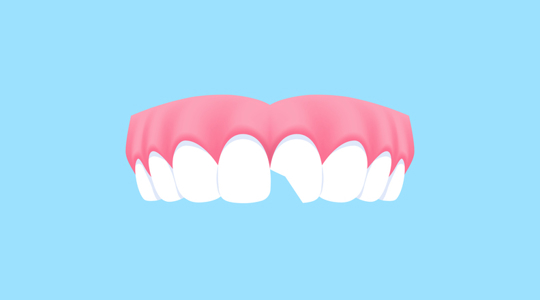
Whether repairing a chipped tooth is a health necessity depends on what broke, not just how it looks. A chip that seems minor in the mirror can be structurally significant, and one that looks alarming sometimes needs nothing more than smoothing. The only way to know which category yours falls into is an exam with a dental professional.
Dental insurance follows the same logic. Coverage decisions for a chipped tooth are based on whether the damage is structural or functional, not on appearance. Understanding that distinction helps set realistic expectations, but the clinical determination happens at your appointment. Your provider's evaluation is what gives you and your insurance company the information needed to move forward.
Book online to schedule a chipped tooth evaluation at your nearest ProHEALTH Dental office.
What We're Looking for During the Exam
Most people assume a chip is cosmetic if it doesn't hurt. That's a reasonable first read. It misses a few things we check for.
When a chip removes enough enamel to expose the dentin underneath, the tooth becomes more vulnerable to decay and temperature sensitivity, often before pain develops. If the break goes deeper into the pulp where the nerve sits, you'll feel that quickly.
Either way, what looks like a surface issue may require restorative treatment to address it safely, not a cosmetic fix.
The shape of the break matters on its own. A jagged edge along the biting surface or near the lip side of the tooth creates soft tissue irritation with regular use. That's a separate clinical concern from the tooth itself, and it's one we look at carefully during the exam.
We also check how your upper and lower teeth come together. Structural damage that shifts your bite puts stress on the jaw and neighboring teeth. Small changes in bite alignment have real effects if they go unaddressed. A bite check is part of every chipped tooth exam, not an add-on.
How Insurance Handles It
Dental insurance draws a line between procedures that restore function and procedures that improve appearance. That line is where coverage decisions get made.
Dental bonding, which rebuilds the chipped area with composite resin, sits in a gray zone. When bonding addresses a structural concern, exposed tooth layers, a bite issue, or a soft-tissue hazard, your plan is more likely to cover part of the cost. When it's done strictly for aesthetics with no functional concern documented, plans tend to treat it as elective. Coverage depends on how the treatment is documented and what your specific plan includes.
Veneers are a different category. Because they're primarily a cosmetic restoration, insurance typically treats them as elective. If structural repair is the priority, we'll recommend something else first. See the cosmetic dentistry options at our offices if appearance is also a consideration once the structural concern is handled.
Crowns fall into restorative coverage more often than bonding does. When a chip compromises enough tooth structure that a crown is the appropriate recommendation, most plans treat it accordingly.
The treatment recommendation comes from the exam. The insurance side is worth understanding, but it doesn't drive the clinical decision.
What Happens If You Wait
A chip that starts small doesn't always stay that way. Exposed dentin is more vulnerable to decay. A small fracture deepens with normal chewing. If the damage reaches the nerve and goes untreated, what might have been a bonding case becomes a root canal case.
That's not a worst-case scenario meant to pressure you into calling. It's what we see when patients wait too long on something that looked minor. And it's why we'd rather tell you it needs nothing than have you find out in six months that it needed something.
Some chips need treatment right away. Some need monitoring. A few need nothing beyond a smooth edge and a follow-up. You won't know which category yours falls into until someone takes a look.
Book online to schedule a chipped tooth evaluation at a ProHEALTH Dental office near you.