
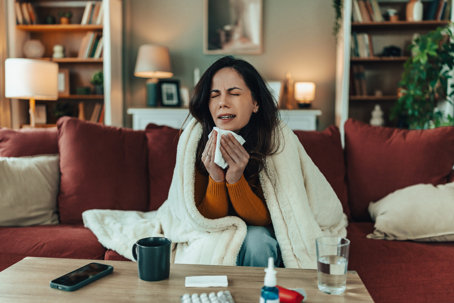
Most people focus on fever, rest, and congestion when they get the flu. Oral health rarely makes the list. However, the conditions that come with being sick, such as dry mouth, acid exposure, dehydration, and missed days of brushing, pose real risks to your teeth and gums that are worth understanding.
The good news is that a little awareness can make a big difference. Understanding what happens to your mouth when you're sick helps you make simple choices to protect your teeth while you recover and know when to follow up with your dentist once you're feeling better.
If you've recently recovered from an illness and noticed changes in your mouth, our team welcomes patients across New York and New Jersey. Book an appointment online at the ProHEALTH Dental location nearest you.
How Being Sick Affects Your Mouth
Illness affects oral health in several ways at once, and most of them are easy to overlook.
The conditions that tend to cause the most damage include:
Dry mouth – Congestion causes mouth breathing, which decreases saliva flow throughout the day and night. Saliva is the mouth's main defense against bacteria; it neutralizes acids, flushes away debris, and provides minerals that help keep enamel strong. When saliva production drops, plaque builds up faster, and gum tissue becomes more prone to irritation. Decongestants and antihistamines make this worse by further reducing saliva, so the dry mouth from the flu can be more noticeable than patients expect.
Acid exposure from vomiting – Stomach acid is highly corrosive to tooth enamel. Even one episode of vomiting temporarily softens enamel surfaces. Repeated exposure raises the risk of decay and lasting sensitivity, especially on the back molars and the inner surfaces of front teeth. The instinct to brush immediately afterward is understandable, but brushing on acid-softened enamel causes further erosion. Rinsing with water first, then waiting at least 30 minutes before brushing, is the proper approach.
Sugary medications – Cough syrups, throat lozenges, and many over-the-counter remedies contain added sugar. That sugar sticks to teeth and feeds the bacteria responsible for cavities. Sugar-free alternatives are available for most products and are worth considering when possible.
Lapsed hygiene – When patients feel unwell, brushing and flossing are often the first routines to go. Bacteria do not pause. A few days of inconsistent hygiene allows plaque to accumulate along the gumline, which can leave tissue inflamed and tender by the time the illness clears.
Sinus pressure and tooth pain – The maxillary sinuses sit directly above the upper back teeth. When sinus congestion causes inflammation, the pressure pushes on nearby nerve roots, producing sensitivity or pain that can feel indistinguishable from a dental problem. This is a common flu symptom and typically resolves on its own as congestion clears. It does not indicate an underlying tooth issue.
Getting a dental checkup after a serious illness provides your dentist with a full view of your current oral health, including early signs of decay, gum issues, and other concerns you might not notice yourself.
What to Do While You're Sick
Managing oral health during a flu or cold does not require much, but consistency matters.
Keep these steps in your routine while you recover:
Keep brushing – Brush twice a day gently with a soft-bristled brush and fluoride toothpaste. Even if it feels like an effort, this is the most important thing you do for your teeth while sick.
Rinse before you brush after vomiting – Rinse your mouth thoroughly with water first, then wait at least 30 minutes before brushing. A baking soda rinse (one teaspoon dissolved in a cup of water) helps neutralize acid and is safe to use immediately after an episode.
Drink water steadily throughout the day – Staying hydrated supports saliva flow and helps offset the dry mouth that comes with congestion and fever. Avoid sugary drinks and sports beverages, which add sugar and acidity to an already stressed oral environment.
Choose sugar-free cough drops and lozenges – Most pharmacies carry sugar-free versions. This small swap removes a meaningful source of cavity risk during a period when hygiene is already compromised.
Use a humidifier at night – If mouth breathing is unavoidable due to congestion, a humidifier reduces moisture loss during sleep and helps prevent oral tissues from drying out completely.
What to Do After You Recover
Once you feel better, two things are worth addressing before returning fully to your normal routine.
Replace your toothbrush. Bacteria and viral particles can stay on the bristles after an illness, and continuing to use the same brush is an unnecessary risk. This also applies to electric toothbrush heads.
Pay attention to how your mouth feels. Some post-illness sensitivity or gum soreness usually goes away on its own within a few days. But if you notice persistent sensitivity, soreness, or anything new or different after the flu has cleared, seeing a dentist is a good next step. Illness doesn’t cause dental problems by itself, but it can create conditions that reveal or worsen existing issues that might not have been noticeable before.
There is also a broader connection worth noting. People who maintain consistent oral hygiene habits tend to have lower rates of respiratory infections, and research supports a connection between oral health and immune function, with studies showing lower respiratory infection rates among patients who receive regular professional oral care. Keeping up with preventive care is about more than just your teeth.
A post-illness visit allows your dentist to assess anything that may have developed during your recovery, examine your gum tissue, and perform a comprehensive oral health check. At ProHEALTH Dental, we include an oral cancer screening and a sleep health questionnaire as part of our routine exam.
If your mouth feels different after recovering from the flu, a routine cleaning and exam is a simple way to ensure everything is back on track. Our team serves patients throughout New York and New Jersey, including Astoria, Hoboken, Garden City, and Yonkers. Book an appointment online.